What First-Time Visitors Should Know About Milano Centrale
Last Updated on 2 November 2026
Milano Centrale is the kind of station that can feel overwhelming for about five minutes and completely manageable once you understand how it works. It is large, busy and constantly moving, but for most travellers the experience is much simpler than the scale of the building suggests.
If Milan is part of a longer European itinerary, it helps to look at the station in context. The broader train travel guides from euTrain are useful when you are planning several journeys, but Milano Centrale itself is worth understanding before you arrive, especially if you are changing trains or coming directly from the airport.
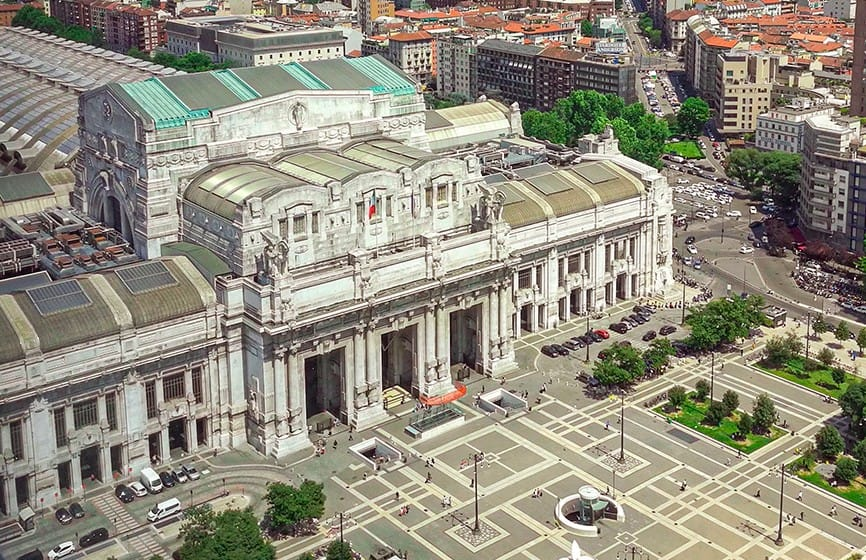
The first thing to remember is that the departure board matters more than instinct. Trains are usually listed by their final destination, which may not be the city where you are getting off. If you are travelling to Bologna on a train continuing to Rome, for example, the board may show Rome rather than Bologna. Checking the train number alongside the departure time is therefore much more reliable than simply searching for the name of your destination.
There is also no need to arrive at the station as early as you would for a flight. For most journeys, giving yourself enough time to enter the station, check the board and walk to the platform is sufficient. Arriving extremely early usually just means spending more time standing around, while arriving with only a few minutes to spare turns an otherwise simple journey into an unnecessary sprint.
Milano Centrale is also well connected to the rest of the city, but “central” does not necessarily mean your hotel is within walking distance. Milan is large enough that checking the actual location of your accommodation before arrival can save time. Depending on where you are staying, the metro, tram or taxi may be the easiest option after leaving the station.
The station becomes even more useful when Milan is not the final destination. High-speed and long-distance services connect it with cities including Venice, Florence, Bologna, Turin and Rome, which is why so many travellers pass through Centrale during a multi-city trip. If you are unfamiliar with the building, reading a guide to Milano Centrale station before arriving can make transfers much easier.
This is particularly important for anyone coming from Malpensa Airport. The airport is well outside central Milan, so a flight arrival and an onward train should never be scheduled too tightly. The airport train itself is straightforward, but you still need to account for baggage collection, walking through the terminal and waiting for the next departure.
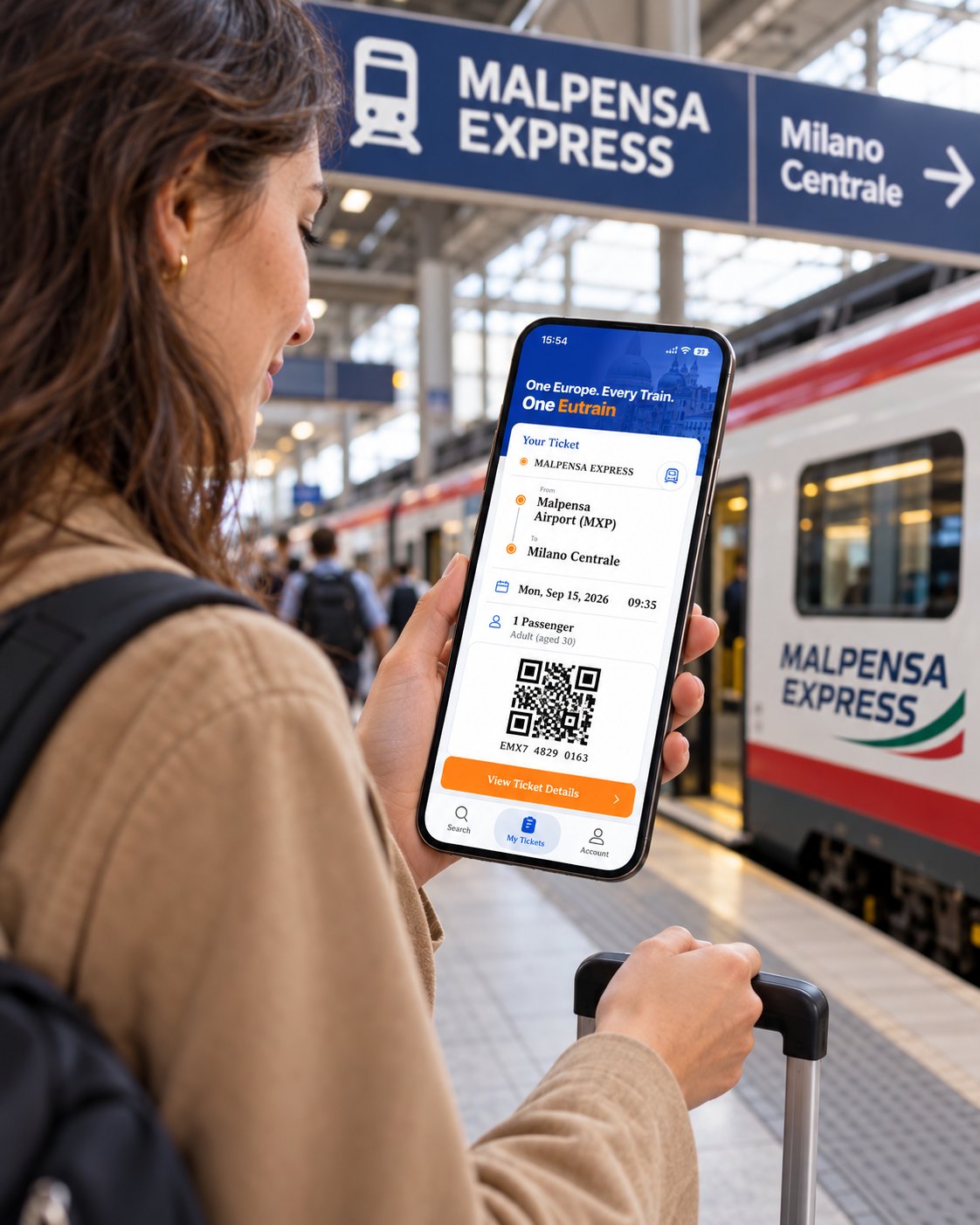
Milano Centrale looks more complicated than it really is. Once you know the train number, keep an eye on the departure board and give yourself a reasonable amount of time, the station becomes easy to navigate.
For most visitors, the best approach is simply to treat it as part of the journey rather than something to rush through.