Converting History Textbook Photos and Sketches into 3D Printable Educational Models
Last Updated on 17 June 2026
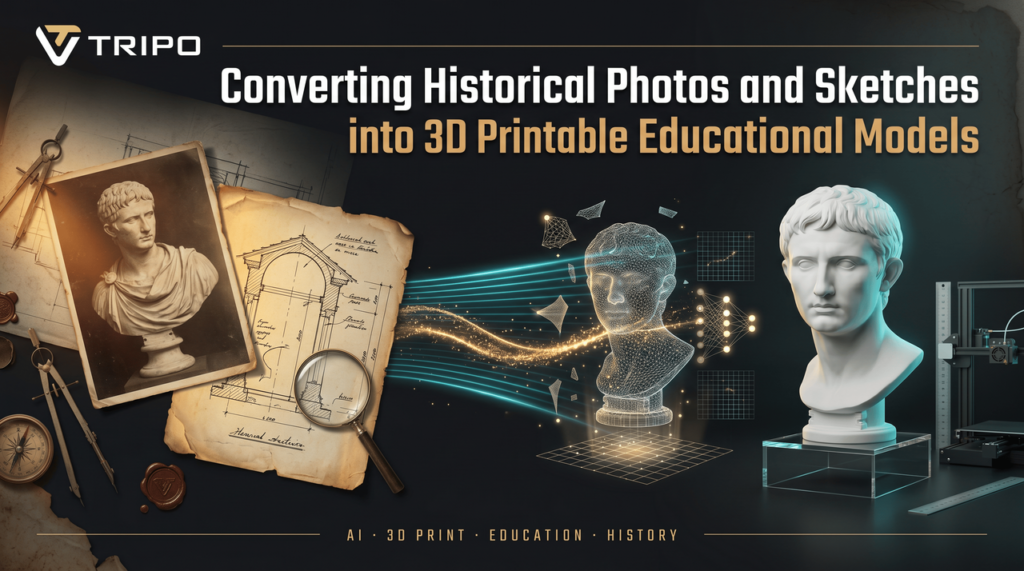
By physically interacting with and examining history, we can learn about its significance. While we learn a lot from pictures and books, it is hard to comprehend the actual size, shape, or details of the objects unless its presented in a 3D view. So it is no wonder that teachers continue to find ways to make learning come to life, particularly now that modern technology has opened up many avenues to do just this.
Tripo 3D is working to bridge the gap between old reference sources and the ability to use them to educate hands-on in the physical world. Tripo uses image to 3D technology to enable history subject teachers and their students to create 3D models of historical images to be viewed and/or printed. This allows students to look at items related to history in a way that they can get close to them and see a realistic representation in digital form.
Now that we have an understanding of how AI-powered workflows can help preserve history and make it available for use in learning, let’s discuss some of the benefits of using AI-powered workflows in education.
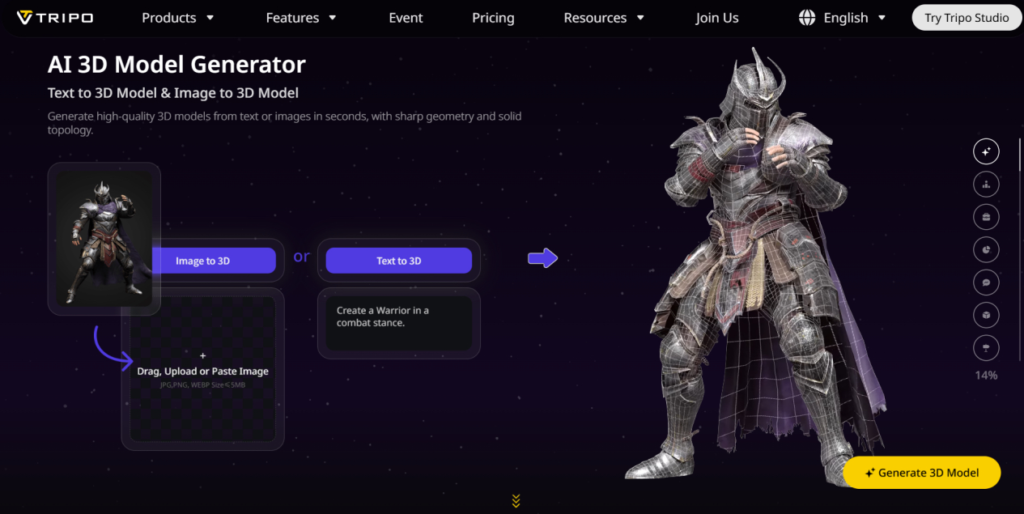
When old photographs become gateways to deeper learning
History archives are filled with visual references that provide valuable insights into the past. From architectural sketches and archaeological drawings to photographs of ancient artifacts and monuments, images like these capture some of the most significant moments in time.
Despite this abundance of material, a flat photograph can only offer one point of reference. It can be difficult for students to visualize how a three-dimensional object may have looked, or what its texture and features may have felt like.
Tripo 3D helps overcome these barriers by transforming flat historical images into interactive and detailed 3D models that are accessible to students everywhere. They offer a truly engaging and meaningful way to bring historical subjects into the classroom.
Why static learning materials leave gaps in understanding
In many cases, history covers objects and monuments that are no longer present, that have been damaged, or that are not easily accessible to most students. Limited access to these materials means that students may be working with incomplete visuals, and have a difficult time comprehending the scale and dimensions of the object. They may also fail to develop a connection with the object that they might if they could see it and touch it in a simulated environment.
Static educational materials can only get students so far. Images and illustrations provide students with some understanding of historical subjects but the ability for them to fully interact with historical objects, compare historical items and explore ancient designs still often requires significant use of their imagination.
Adding a third dimension to learning helps close this gap and provides students with new avenues to understand historical subjects like ancient artifacts.
Rebuilding lost details from fragments of the past
Preservation of historical items usually involves bringing together missing pieces of information. Teachers and students working on these school projects may only have existing fragments of objects, limited hand drawings or architectural sketches to work with, or photographs that only show a certain angle of an artifact. These often take long amounts of time and considerable design expertise to put together.
The application of the Tripo AI software helps speed up these time intensive tasks by generating a three-dimensional representation from limited visual references, and allowing users to then modify and refine this reconstruction. Whether reconstructing an artifact, ancient tool, museum exhibits or architectural details, a teacher could more easily build up historical materials that promote interactive exploration.
This has great potential in making the reconstruction process of many ancient objects much more accessible.
Where technology helps preserve stories for future generations
Today’s 3D AI technology is changing how our educational institutions will preserve history for generations to come. Modern AI doesn’t replace existing methods, rather it augments them to allow for faster digital reconstruction of historical objects. Educators will still be responsible for context, research, and educational direction, however 3D AI can efficiently turn visual references into useful and interactive educational tools.
When history and modern technology combine, they can lead to exciting opportunities in classrooms, museums, and other educational institutions looking to increase access to history. The Tripo AI helps provide this pathway from static archival references to interactive educational models in the classroom by increasing production efficiency and reducing the burden of data.
From archived references to classroom-ready models
Once a historical picture or drawing has been gathered, the process is quite simple. Here’s how:
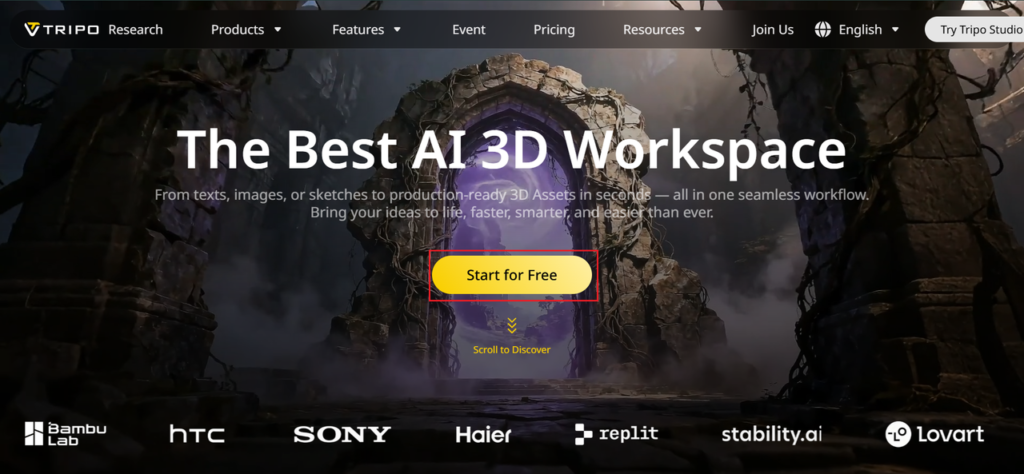
Step 1: Choose input and upload
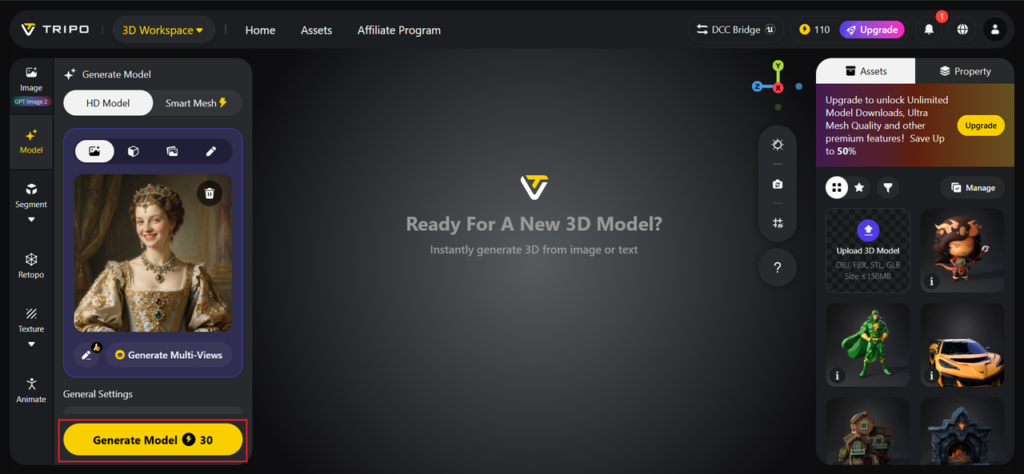
Choose your preferred method of generation within the Tripo AI workspace. Historical drawings and sketches work exceptionally well as photographic sources, but any visual with adequate detail will work. Upload an image in JPG, PNG, or WEBP format, ensuring the key details of the image are fully visible.
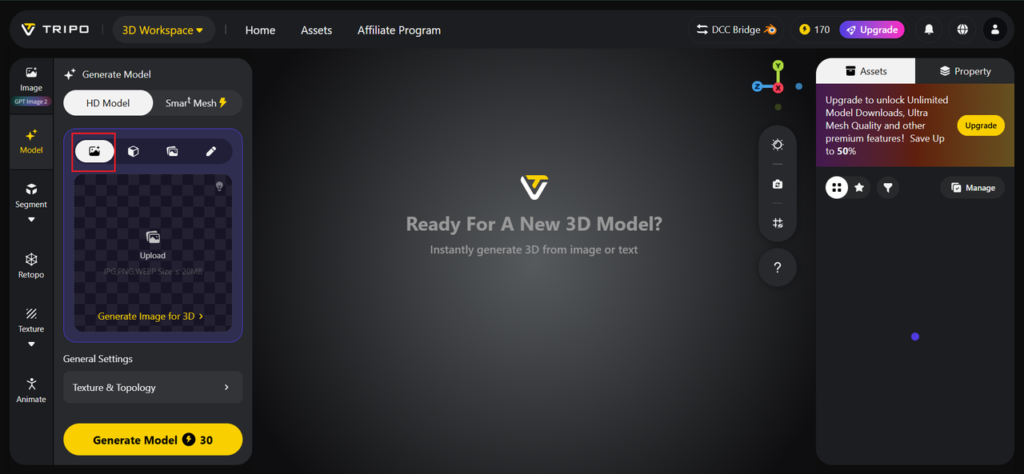
Step 2: Configure settings
You can determine exactly what qualities you’d like to capture about your object within its 3D model. High mesh quality can help to preserve the detail of delicate architectural or artifact-based structures, whereas the texture settings will ensure a lifelike rendering of any of your object’s historical details.
Step 3: Generate and Refine
After the 3D model has been rendered, there are several helpful editing tools within Tripo AI that can assist with perfecting it. You can refine textures and modify them, pull out any separated parts of the object using asset extraction, or use Magic Brush to modify elements of the model that could use fine-tuning. These allow for much greater accuracy and detail within your educational content.
Step 4: Export
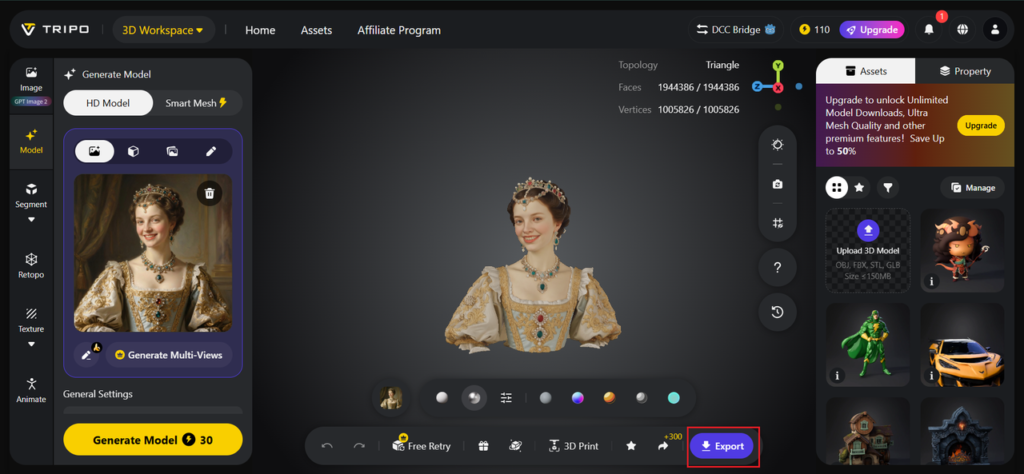
The final step allows you to choose the type of file you want for your 3D model depending on your planned use. You can export models in many different formats, including STL, OBJ, FBX, GLB, and USD, all of which work with 3D printers as well as a vast array of software and viewing applications.
Giving students something they can truly explore
Students learn a great deal more from education when they are able to fully interact with their subject. When students are provided with interactive 3D historical models, they have the opportunity to view artifacts at different angles, analyze the structure of buildings and monuments, compare historical objects side-by-side, and create interactive exhibits that make the learning experience far more dynamic.
When history is able to be examined and studied from so many different perspectives, learners gain a much deeper connection and understanding of their subjects than if they simply study historical photographs or text. Tripo AI can assist with these greatly interactive educational tools, removing a lot of the complexity associated with preparing and creating these models for educational purposes.
Making the journey from image to STL easier for educators
Schools and museums alike are taking advantage of 3D printing as an effective way to increase accessibility to a wide range of educational resources at a low cost. Traditionally this has required highly specialized design programs, and often extensive technical knowledge and training to utilize them.
Today, it is easy for anyone to make printable educational resources at home or at work thanks to AI powered workflow designs like Tripo AI, which makes the path from a historical image to STL files much more streamlined.
This will bring about a great opportunity to offer and receive experiential learning across a number of different disciplines.
Where historical 3d models are transforming education
Museum exhibits can now feature detailed reproductions for the public to actually touch and examine, without risk to priceless historical artifacts.
Archaeology departments have better ways to review dig results and compare artifacts. Students and architects have new ways to view and analyze the structures of the past and organizations that work on heritage preservation can offer new ways for the world to see historical objects that will otherwise remain unseen.
Tripo AI assists every one of these examples in making history an interactive learning experience.
Bringing history out of the archives and into students’ hands
Historical photographs and sketches often hold forgotten stories waiting to be explored outside the pages that they lie within. Whether you’re working on historical artifact reconstruction, architectural designs, or cultural relics, the Tripo AI offers a way for teachers and students to contribute to an increasingly detailed and interactive view of history.
Ready to turn old photographs and sketches into a hands-on learning experience for your classroom? Create a 3D historical model with Tripo AI today!