Boost your sales with CRM WhatsApp integration
Last Updated on 15 December 2025
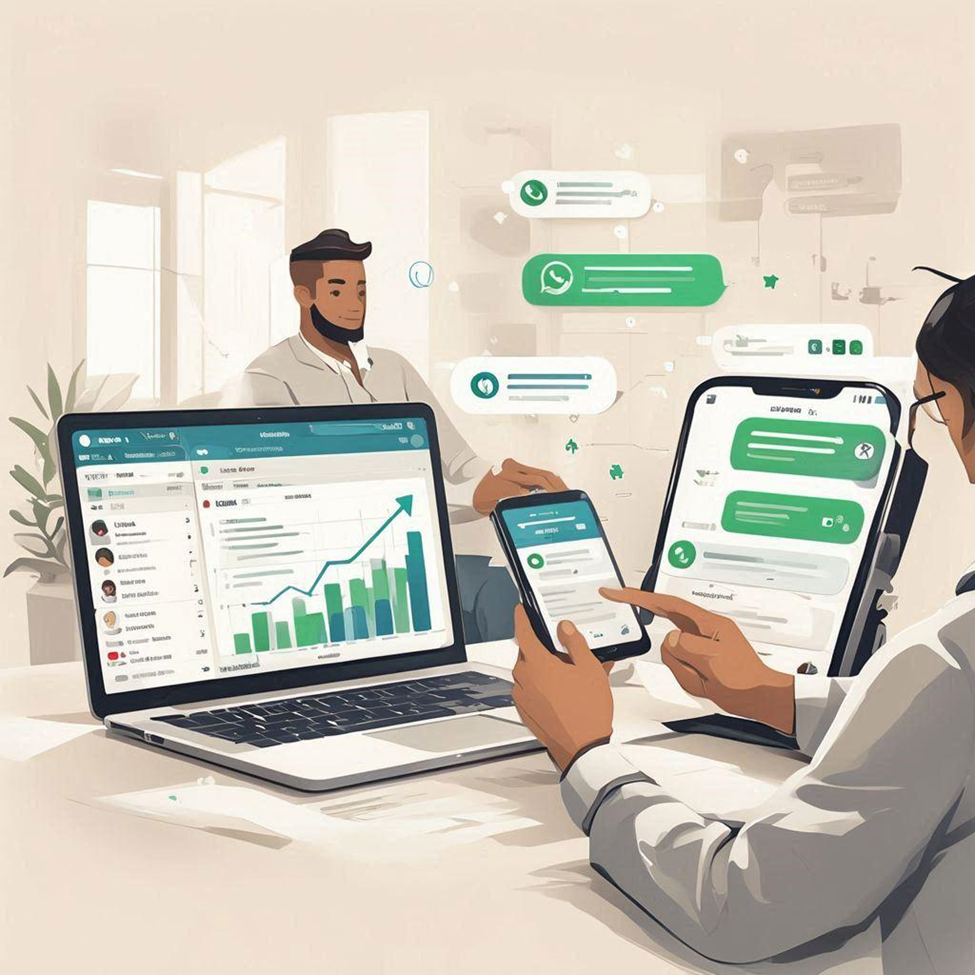
You know the feeling. A lead messages you on WhatsApp, maybe from an ad you’re paying good money for. The chat notification gets lost in a sea of others. By the time you find it, the trail has gone cold. They’ve already bought from the competitor who answered in five minutes.
That pang of frustration isn’t just a missed chat. Much more, it’s also the sound of money walking out the door. Trying to run a sales operation from a standard WhatsApp account is like trying to manage an office from a cluttered glove compartment. It’s messy, nothing is where it should be, and it actively works against you.
But there’s a way to leave that chaos behind. Let’s talk about how a CRM WhatsApp integration builds a sales process that doesn’t just work, but wins.
Beyond a simple chat tool: shifting from conversations to conversions
Thinking of WhatsApp as just another messaging app is a costly mistake. Its true value is unleashed when you see it as the central nervous system of your sales funnel, turning random pings into structured interactions that reliably lead to a sale.
The standard WhatsApp Business app just can’t keep up. It was never designed for teamwork, has next to no automation, and gives you zero visibility into your actual sales pipeline.
Every message a potential customer sends is a breadcrumb. Without a system to gather those breadcrumbs, the path to a sale vanishes. A CRM WhatsApp integration is the machine that not only gathers them but also paves the road for you.
Unify your sales pipeline: from a messy inbox to a single source of truth
The first thing you’ll feel after integrating your CRM with WhatsApp is relief. The constant, low-grade anxiety of scattered information is gone, replaced by a single, reliable command center for every customer conversation.
A message arrives from an unknown number? A new lead card is instantly created in your CRM, details captured. No more manual data entry.
Every interaction that follows—texts, shared files, voice notes—is automatically logged. The endless internal chatter of “Who spoke to this person last?” is silenced for good.
This also gives team leaders a bird’s-eye view of the entire operation. They can see every conversation, assign leads to the right person, and spot coaching opportunities without ever having to ask for a single screenshot.
Hyper-personalization at scale: speaking to customers, not just numbers
Real relationships drive sales. But you can’t build them one-on-one when you’re trying to grow. A CRM WhatsApp integration solves this puzzle, letting you personalize communication without the soul-crushing manual work.
You can leverage the data you already have—past purchases, location, expressed interests—to send messages that actually matter. Think one-click templates for welcomes or follow-ups, auto-filled with the customer’s name and relevant details.
And for the first line of contact? A well-trained chatbot whatsapp business can handle initial questions or qualify new leads 24/7, ensuring no one is ever left on read and your team gets a running start with prospects who are ready to talk.
When someone receives a prompt, genuinely helpful message on the app they use to talk with friends, it short-circuits the sales process. You’re no longer just another email in their promotion tab; you’re a helpful contact who gets things done.
The modern sales engine: actionable workflows for immediate ROI
Theory is fine, but results are what matter. This is where a CRM WhatsApp integration gets exciting. It’s a sales engine with specific plays you can run for a tangible return, fast.
A quick but important note: to do this right, you need the official WhatsApp Business API. It’s the only robust and scalable solution approved by Meta. Stay far away from unofficial tools; they’re unreliable and a great way to get your business number blocked. The API is your key to the kingdom.
Workflow #1: the “speed to lead” funnel for social media ads
The gap between a lead showing interest and your first contact is where most of your marketing budget goes to die. This workflow cauterizes that wound.
Here’s the play: a user clicks your ad’s “Send Message” button. Their first WhatsApp message instantly creates a new deal in your CRM. At the exact same moment, an automated welcome shoots back: “Hi [Name], thanks for reaching out! A specialist will be with you in just a moment.”
The new lead is then auto-assigned to an available salesperson, who gets a ping. They see the full context and jump straight into a valuable conversation. The whole thing happens in the time it takes to read this paragraph.
Workflow #2: the abandoned cart recovery bot
For any e-commerce store, abandoned carts are recoverable revenue just sitting there. Email reminders are easily ignored, but a WhatsApp message is almost impossible to miss.
A customer leaves items in their cart. Your store tells your CRM. After an hour, the CRM sends a friendly, automated nudge: “Hi [Name], noticed you left a few things in your cart. Had any questions I can help with?”
It’s personal. It’s low-pressure. It feels like good customer service, not a desperate sales tactic. This simple message re-opens the conversation and gives you a real chance to bring that sale home.
Your blueprint for a conversational sales machine
A CRM WhatsApp integration isn’t another tool to add to your stack. It’s a fundamental upgrade to your entire sales philosophy, making it smarter, faster, and unapologetically customer-focused. It’s how you build a system where no lead is ever left behind.
By organizing your pipeline, personalizing your outreach, and automating the repetitive tasks, you build a machine that methodically turns conversations into currency. You stop watching potential sales evaporate.
The future of sales is happening in the chat window. The businesses that build a seamless journey where their customers already are, are the ones who will win.