The Two Values of an Ace in Live Blackjack
Last Updated on 18 November 2026
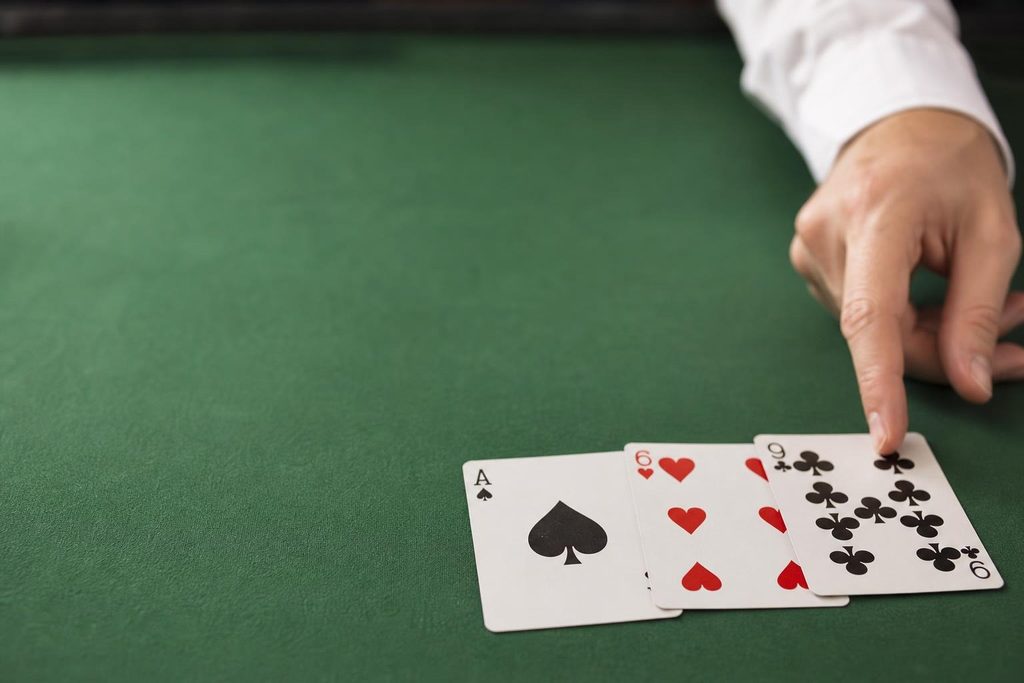
An ace and a 6 make 17. Add a 9, and the total becomes 16. The arithmetic makes sense once the ace takes its lower value: 1 + 6 + 9.
That small adjustment explains much of what happens to ace-containing hands. For readers exploring live blackjack canada, it also helps explain the changing totals beside the cards on screen. A live dealer deals physical cards while players take part remotely. As more cards arrive, an ace can count as 11 or 1, affecting the hand’s total and the rules that apply.
How an Ace Counts as 1 or 11
An ace counts as 11 when that value keeps the total at 21 or below. If 11 would take the hand above 21, the ace counts as 1. Players and dealers use the same calculation.
With ace plus 6, counting the ace as 11 gives 17. A 9 changes the calculation to 1 + 6 + 9, making 16. Another 5 would bring the hand to 21.
There is a straightforward way to check any hand containing aces. First, count every ace as 1 and add the other cards. Then add 10 if the result stays within 21. Cards from 2 through 10 carry their printed values; jacks, queens and kings each count as 10. The total is worked out again whenever another card arrives.
The Difference Between Soft and Hard Hands
A hand with an ace counted as 11 is soft. When every ace must count as 1, the hand is hard. Hands containing no aces are also hard, as the Washington State Gambling Commission’s blackjack rules explain.
Those terms describe how much room the ace gives a hand. Ace plus 6 is soft 17 because the ace can fall from 11 to 1 after another card. Ace, 6 and 9 make hard 16 because the lower value is already needed.
Similarly, ace plus 7 is soft 18, while ace, 7 and 9 total hard 17 after the ace becomes 1.
A soft hand can receive one more card without busting. For instance, a king added to ace plus 6 produces hard 17. The next draw is judged against that new total: a 5 would bring it to 22, ending the hand with a bust.
What Happens With Two Aces
Two aces make soft 12: one counts as 11 and the other as 1. A third card can change how both are counted. Add a 9 and the hand becomes soft 21. Add a 10 instead, and both aces count as 1, leaving hard 12.
Only one ace can count as 11 in a hand totaling 21 or less. Two valued at 11 would already make 22.
A pair of aces also raises the question of splitting. Where the table allows it, splitting separates the pair into two hands, each scored on its own. It requires a second wager equal to the first, so an opening $10 wager becomes two $10 wagers.
Common rules give each split ace one additional card. The table’s published rules establish the restrictions, including whether another pair of aces can be split again.
When 21 Qualifies as Blackjack
The cards’ arrival matters as well as their total. An ace and a 10, jack, queen or king dealt as the original two cards form a natural blackjack.
Ace, 6 and 4 reach the same total through a draw. Under standard blackjack rules, an ace paired with a 10-value card after splitting also makes an ordinary 21. A natural ranks above these hands. If both player and dealer receive a natural, the result is a push and the player’s original wager is returned.
Payouts depend on the posted rules. At 3:2, a winning natural earns $15 profit on a $10 wager, returning $25 including the original bet. At 6:5, that wager earns $12 profit and returns $22. The ace’s value is the same in each case; the payment changes with the table’s payout. Large live lobbies, such as the one at ToonieBet Canada, often run several blackjack tables at once, and their posted rules are not always identical.
How the Dealer Plays an Ace
Now put the opening ace and 6 in the dealer’s hand. At a table where the dealer stands on soft 17, the hand is finished. Where the dealer hits soft 17, another card follows.
A 9 would leave the dealer with hard 16, requiring another draw. Card values establish the total, and the table’s fixed drawing rules determine what happens next.
Understanding those rules helps readers follow the round. Gambling carries financial risk, so spending should stay within a predetermined entertainment budget, with time limits set beforehand. The ace offers flexibility in scoring, while every wager remains money at risk.