The Science of Dynamic Reels: How Megaways Mechanics Redefined Online Slot Volatility
Last Updated on 6 August 2026
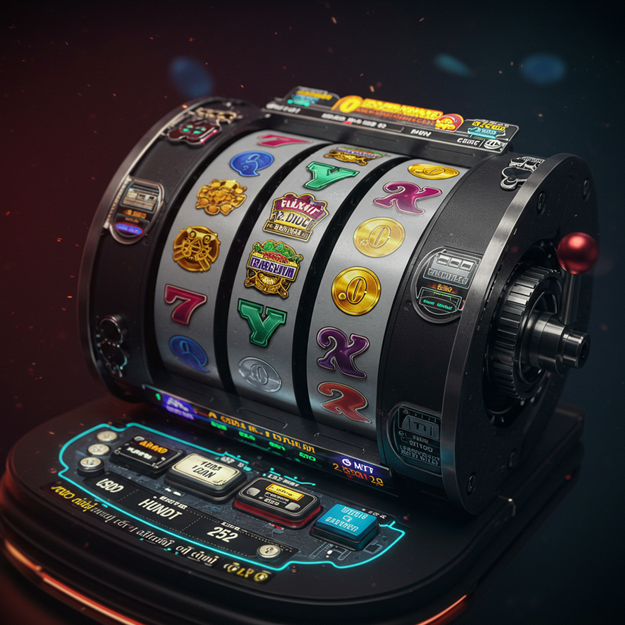
Remember when slot games were simple? You would press a button, watch three reels spin, and hope three matching symbols lined up across the middle. It was straightforward, predictable, and, truth be told, a bit limited. Over the last decade, things have changed dramatically. The introduction of dynamic reel systems has completely reshaped the landscape of online gaming, turning traditional mathematics on its head.
If you have spent any time looking at modern games, you have likely come across titles featuring a staggering number of potential winning paths. But what is actually happening behind the screen when these reels expand and contract? Let us take a proper look at the science behind this mechanical shift, how it alters game volatility, and why it has changed the way we play.
Demystifying Slot Mathematics: The Relationship Between RTP, Volatility, and Hit Frequency
Before we can understand how dynamic reels shook things up, we need to get to grips with the core math that governs every slot game. It boils down to three main elements: Return to Player (RTP), hit frequency, and volatility.
RTP is the theoretical percentage of wagered money a game pays back to players over a massive number of spins, usually sitting somewhere between 94% and 97%. Hit frequency, on the other hand, tells you how often you can expect to land a winning combination. You might think a high hit frequency means you are on to a winner, but many of those wins might actually pay out less than your initial stake.
This is where volatility, or variance, comes in. Volatility is all about the risk profile of the game. A low-volatility slot is like a steady, gentle stroll; it serves up frequent but smaller wins, keeping your balance relatively stable. High-volatility games are a different beast altogether. You might experience long stretches of nothing at all, followed by a sudden, sizeable payout.
Historically, these three metrics were bound by rigid mathematical models. If game developers wanted to create a high-volatility game, they had to accept a lower hit frequency. But the arrival of dynamic mechanics changed the relationship between these numbers, allowing games to combine high volatility with a sense of constant, evolving movement.
The Mechanical Leap: Traditional Fixed Paylines vs. Dynamic Random Reel Modifiers
To appreciate this shift, think about how traditional slots operate. For decades, slots relied on fixed paylines. Whether a game had 9, 20, or even 243 ways to win, those paths were set in stone. Every time you pressed spin, the grid remained a reliable five-by-three rectangle. The reels spun, they stopped, and the software checked those exact coordinates for matches.
Then came the random reel modifier. This technology threw the static grid out the window. Instead of a fixed number of symbols on each reel, a dynamic engine allows the number of symbols to change on every single spin.
On any given turn, the first reel might show two symbols, the second might show seven, the third might show four, and so on. This completely alters the physical structure of the game board in real time. Suddenly, players were not looking at a predictable grid, but a shifting, living puzzle. This mechanical leap meant that the number of paylines was no longer a static number, but a variable that could range from a few hundred to hundreds of thousands on a single press of the button.
Inside the Algorithm: Cascading Wins, Unlimited Multipliers, and 117,649 Ways to Win
How does this work in practice? The classic setup features six reels, and on any spin, each reel can display anywhere between two and seven symbols. If you do the maths, when all six reels show the maximum of seven symbols, you get seven multiplied by itself six times (7 x 7 x 7 x 7 x 7 x 7). That is where the famous figure of 117,649 ways to win comes from.
To make these vast numbers work mathematically without ruinous hit frequencies, developers introduced cascading wins, sometimes called reactions. When you land a winning combination, the participating symbols vanish, and new symbols fall down from above to fill the empty spaces. This can trigger another win, which triggers another cascade, all within a single paid spin.
To add another layer of complexity, these cascades are often paired with progressive multipliers during bonus rounds. Every successive cascade in a sequence increases the win multiplier by one.
This creates a fascinating mathematical curve. The base game can feel highly volatile because the grid is often small, offering fewer ways to win. But when the reels expand fully and cascades start chaining together, the volatility curve spikes sharply. It is a beautifully complex mathematical dance that keeps every spin feeling genuinely unique.
Lobby Navigation and UX: How Modern Platforms Categorise Complex Reel Structures
With so many variations of these dynamic systems now available, online platforms have had to completely rethink how they organise their game lobbies. Gone are the days when a simple division between classic slots and video slots was enough to help players find what they wanted.
Modern user experience design is all about helping you find the right game without giving you a headache. If you log onto a platform today, you will notice highly sophisticated filtering systems. Platforms now categorise games not just by theme, but by their underlying mathematical DNA.
We have moved away from basic keyword searches and into a world where players can filter games by volatility levels, grid behaviour, and payout structures. This clever categorisation helps players transition from simply searching for a visual theme, like ancient Egypt or Irish luck, to selecting games based on how the reels actually behave. Designers use intuitive icons, clear volatility indicators, and dynamic search bars to ensure that these complex mathematical structures are easily identifiable, even for someone who is relatively new to online gaming.
Empirical Application: Analysing Volatility Curves in Live Play Environments
If you want to understand how this mathematical theory translates into real-world play, there is no substitute for watching these systems run. Observing how the volatility curves behave over a session reveals the contrast between quiet spells and sudden, explosive chains of cascades.
To see these complex mathematical structures in action for yourself, you can explore the curated megaways slots collection at Bally Casino. When playing these games, take note of how often the number of ways to win shifts and how the cascading mechanic alters the pace of the game compared to a standard flat-payline slot. It is a fantastic, hands-on way to see how modern software balances massive potential ways to win with high-volatility play.
Keeping It Fun
The evolution from simple physical reels to dynamic, algorithmic game engines has transformed the world of online slots. By moving away from fixed grids and embracing random reel modifiers, developers have created a much more dynamic style of play that challenges our traditional understanding of slot volatility.
As games continue to evolve, the underlying mathematics will only become more sophisticated. However, the core appeal remains the same: the simple anticipation of seeing what the next spin will bring. Just remember to always keep things fun and play responsibly. Set your limits before you start, keep track of your time, and ensure that your gaming remains a relaxing, enjoyable hobby.